
Of all the countries that I’ve traveled, Colombia surely has by far the most misconceptions about safety.
The misconceptions go both ways. Some people’s minds are still stuck in the past, associating Colombia only with drug cartels or Pablo Escobar, even though Colombia of today is nothing like it was in the 1990s.
But then there are also those on travel forums or blogs who, in trying to correct the outdated image, will overcompensate way too much, even ridiculing those asking normal questions. They’ll claim Colombia is ‘completely safe’ or ‘safer than most Western countries’.
This too is unfortunately incorrect. The truth is somewhere in the middle.
To help you prepare for your Colombia trip, let me explain both the good and the bad about safety in Colombia, at least the way I see it based on my experiences travelling here.
(Alright, get ready for some raw and unfiltered NUANCE!)
TIP: If you read just one section here, make sure it’s the one about nightlife. This is especially true if you’re a (solo) male traveller looking to date locals, which is a lot more dangerous than it may seem. In other normal tourist activities, there are fewer concerns.
Safety in Colombia: what you really need to hear
Before I get lost in certain details, I think it’s very important to start with the positives. Many safety guides skip over this part and end up giving a wrong impression.
Colombians are extremely friendly, the atmosphere is super fun, and you can explore most parts with relatively few worries. Travelers in Colombia are often surprised by just how easy and welcoming it is.
Colombia happens to be one of my top favorite countries out of the 70+ I’ve been. It has some of the most interesting cities in South America, its biodiversity is the world’s second-highest making it incredible for ecotourism, and there is so much variety within Colombia that it’s super fun to travel through. The vibe is great, the latin music is ever-present, and it’s an affordable destination to boot.
Please keep these points in mind while you read about the safety aspects!
The bottom line is that Colombia is mostly a safe country (with an emphasis on ‘mostly’). You can travel around Colombia as a tourist just fine.
It does come with a bit of an instruction manual, so to speak.
However, a problem with providing safety information is that you always need to be quite detailed. You have to mention everything just in case. But you can quickly get lost in all these ‘helpful details’ which can then begin to overwhelm all the positives. Just keep the positives mind when researching this topic and don’t get stuck too far in a rabbit hole. Now with that said…
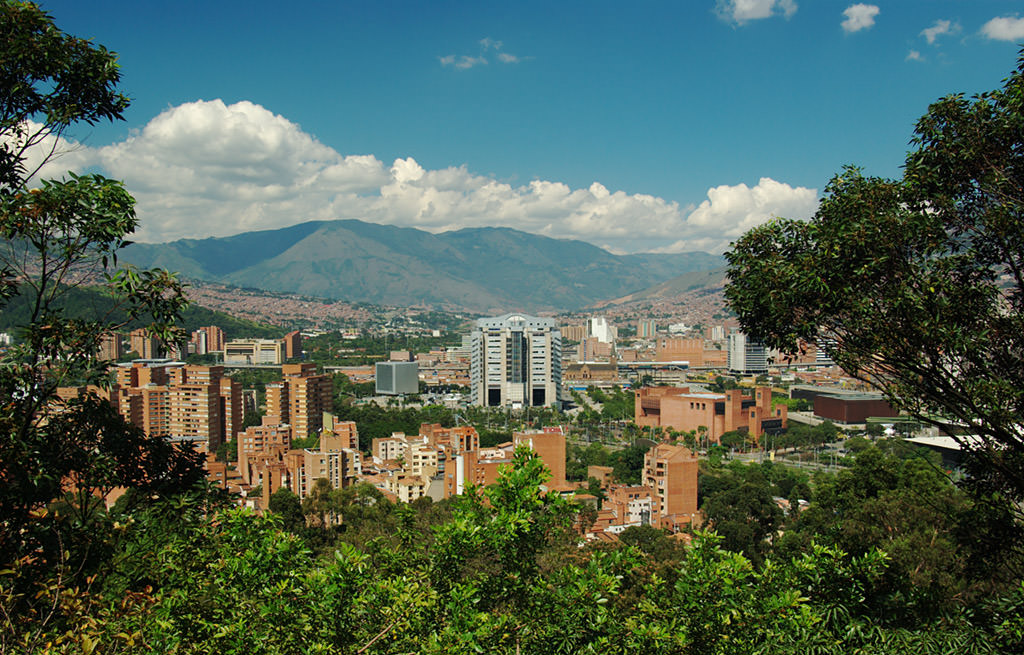
How Colombia has changed
For much of the 20th century, Colombia was torn apart by drug cartel violence and a brutal internal conflict that lasted for over five decades (yes, half a century!).
After experiencing some of its worst years in the 1980s and 1990s, the situation began to improve. The notorious crime boss Pablo Escobar died in a police raid in 1993. Over time, long-simmering conflicts were resolved. Cities were reinvigorated with new public transit systems and other public works and safety slowly improved.
(It’s actually quite an inspiring transformation story! Medellin is one of the best places to learn more about it and I recommend going on a guided walking tour there.)
But while the big transformation happened over two decades ago, the situation in Colombia is still improving, with inevitable ups and downs.
I first travelled in Colombia back in 2013, when it was a bit of a new tourism frontier. Not everywhere was safe at the time, but the general advice was that you were fine so long as you stuck to the main travel trail.
In 2016, the Colombian government signed a peace accord with the FARC rebels, prompting them to lay down their weapons. This finally opened up many other regions for tourism.
When I travelled in Colombia again in 2022, I noticed how it’s become more of a mainstream accepted travel destination. There were also fewer ‘problem areas’ on the map than before.
Just compare this safety map from 2013, which is from the UK Ministry of Foreign Affairs and which I saved at the time…
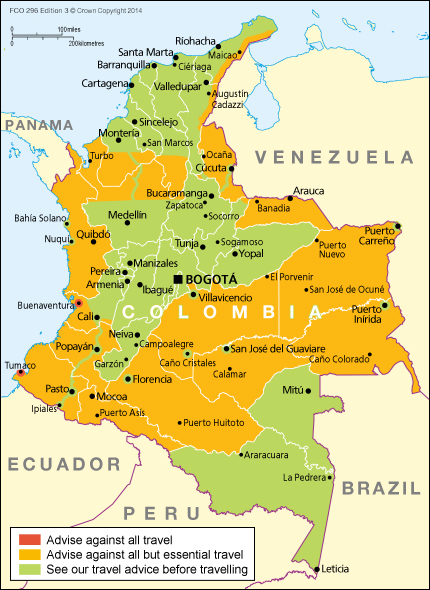
… to what this same safety map looks like in 2022:
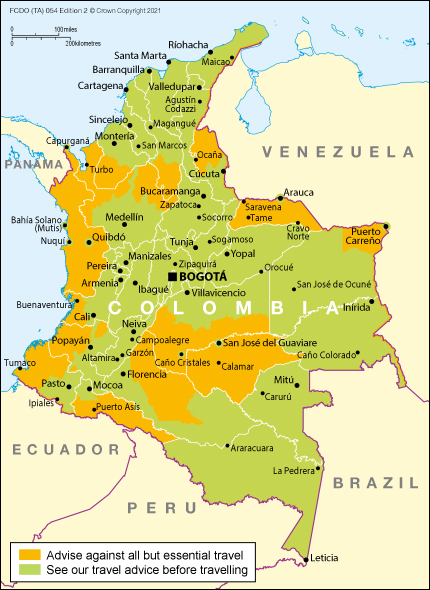
That’s quite a significant improvement!
(In 2026 the map is still the same, except for a small territory near Cucucta around the Venezuelan border which is now orange.)
Virtually all the tourist sites are in the green areas. The orange parts are mostly deep in the the rainforests along the borders and in the Amazon where very few people go.
TIP: I highly recommend consulting the reasonable and informative UK travel maps, or the travel advisories of Canada, Australia, or other European countries. The US State Department is notoriously litigation-obsessed and unhelpfully paints all of Colombia with one brush. You won’t really get the balanced take from them.
Safety precautions in Colombia
Having said this, Colombia is not exactly a crime-free paradise. To ensure your trip will have a lower level of risk, it’s important to still maintain awareness and take common sense precautions.
Typical advice such as “don’t flash expensive jewellery” or “don’t wander the streets drunk alone at night” are useful anywhere, but definitely in Colombia.
Besides the basic precautions, you can also:
- Avoid regions with a bad reputation. You can find these in safety guides or in maps like the one shown earlier. The ‘bad regions’ in Colombia are mostly areas close to the borders with Venezuela, Ecuador, and Panama, or very deep in the Amazon. My advice is to look at maps, not reading long textual lists of departments or municipalities that you should avoid, which can be much more negative and intimidating. Just stay in green zones on the map (unless you know what you’re doing). You’ll have instantly made your trip much safer. Yay!
- Do take a bit more care in the cities; don’t show off expensive gear and carry only the cash you need for the day. Ask your hostel or hotel staff if there are bad neighborhoods, just to be sure.
- Always maintain some situational awareness; don’t walk around the streets with your phone in hand without paying any attention, for example. There is an expression in Colombia, “no dar papaya”, which basically means “don’t make things tempting for a criminal”. This is always good to live by.
- Inside the cities and particularly at night, be sure to take official taxis (or use ride-hailing apps such as Uber, Cabify, Beat, or Didi which are safe). Official taxis can be found at taxi stands. Don’t get into a random car you’ve hailed on the street.
- When you need to take money out, it’s worth doing so inside a bank or inside a shopping mall during the day where there are plenty of cameras and security staff around. Then stash most of your cash at your accommodation until you need it.
- Do take extra care in the nightlife (in the big cities) if you will be going out. Go out together with some friends and don’t accept drinks or cigarettes from strangers. Drugging/spiking is sadly known to occur; it’s important to know for women, but also for men who are sometimes ‘seduced’ by a Colombian woman who ends up being a criminal. The nightlife is super fun, by the way, especially if you like Latin music like salsa, but it’s good not to be naive and to keep your wits about you.
By following safety advice, you can have a fun and much more worry-free trip in Colombia.
Dating or nightlife (Important!)
The nightlife is a bit of a separate issue from doing normal tourist activities during the day, requiring more awareness and care. This is especially true in cities like Medellin and Bogota.
The most important tip is really this: only drink what’s come from the bar and went straight into your hands. Spiking is a thing in Colombia — so don’t accept drinks or cigarettes from strangers.
This is a safety concern for women but mainly for men. There have been reports of foreign men getting drugged by Colombian women and waking up the next morning in their hotel room with all their belongings stolen.
(A guy I travelled with for a while actually had this happen to him. It was not in Colombia but in Nicaragua, but this forever made this possibility more real to me. He literally woke up in his hotel room with everything stolen, including his passport. In recent years Colombia travel Facebook groups have fairly regularly seen reports about situations like this, posted anonymously. Take it seriously!)
If you go on Tinder dates be very careful and don’t invite a stranger into your hotel room. If you really need to get busy, go to a so-called “love hotel”. Since a lot of Colombians live with their families (i.e. with not much privacy) it’s normal for them to go to these places to have some fun.
Don’t go overboard with drinking and take taxis or use ride-hailing apps to get home. Honestly a lot of the (rare but present) safety incidents I hear of relate to the nightlife.
Don’t let that make you hyper paranoid though: I loved going out in Colombia and even got invited to local parties where I made some great Colombian friends. The salsa dancing scene is amazing. Just stay smart when going out.
Do you need travel insurance for Colombia?
Insurance is not a requirement to enter Colombia and having travel insurance won’t in itself keep you safe. However, it does cover you financially should you be so unluck to face certain issues during your trip.
In situations like theft, delay, sickness, or accident it means you will be covered financially. You will also have a hotline (or a support app) to use for advice in these situations.
I personally use and recommend Heymondo, which offers great value and good customer service. You can get a quote for your Colombia trip here. If you are a little adventurous, it’s good to know they’ll cover actitivies such as ziplining, kayaking, paragliding, and much more.
While certain aspects of safety are down to luck or traveller smarts, having insurance is something you directly control that can give yourself increased peace of mind.
Insurance for Colombia

Travel insurance will cover you for theft, medical emergencies, trip cancellation, and much more.
I always use Heymondo, which offers great coverage, no excess or deductibles, and an app with 24/7 assistance & doctor chat for more peace of mind when you travel.
Get a quote at HeymondoAre the cities in Colombia safe?
Honestly, it depends.
Some cities or neighborhoods have a better reputation than others.
When I went to Barranquilla for carnival with a group of backpackers, no joke, about a third of us ended the day without their phones. (During carnival people are easily distracted by the parades and all the celebratory foam sprayed from cans, making it a bit of a free-for-all for thieves.)
I liked spending time in the city of Santa Marta in the north and didn’t have any issues, but traveller groups pretty regularly talk about muggings or petty theft there.
Similarly I loved Cali and its famed salsa dancing culture. As a tourist you’re almost certainly going to spend time in the center, not in the “comunas” (outer neighborhoods) that can be most troublesome. However, while I felt quite safe in Cali, it honestly has a very high murder rate. It probably should require a bit more street smarts just as a baseline than Medellín, Cartagena, or Bogotá.
More touristy destinations like Cartagena are generally safe and worry-free, though even there the can still be some nuance. The old city of Cartagena is more or less on an ‘island’ as it’s surrounded by canals and this entire inner area is very safe, as is the Miami-like beach area of Bocagrande. However, several locals informed me that the neighborhood below the hilltop Convent of Santa Cruz de la Popa is a bit of a ‘no go zone’ and that you should always take a taxi to this convent.
It’s quite an out of the way place that most tourists in Cartagena don’t go to. But I’m just including this to give a realistic “it’s safe, but…” picture.
On the tourist trail, the safety levels are quite high. But specific neighborhoods can be the exception to the rule.
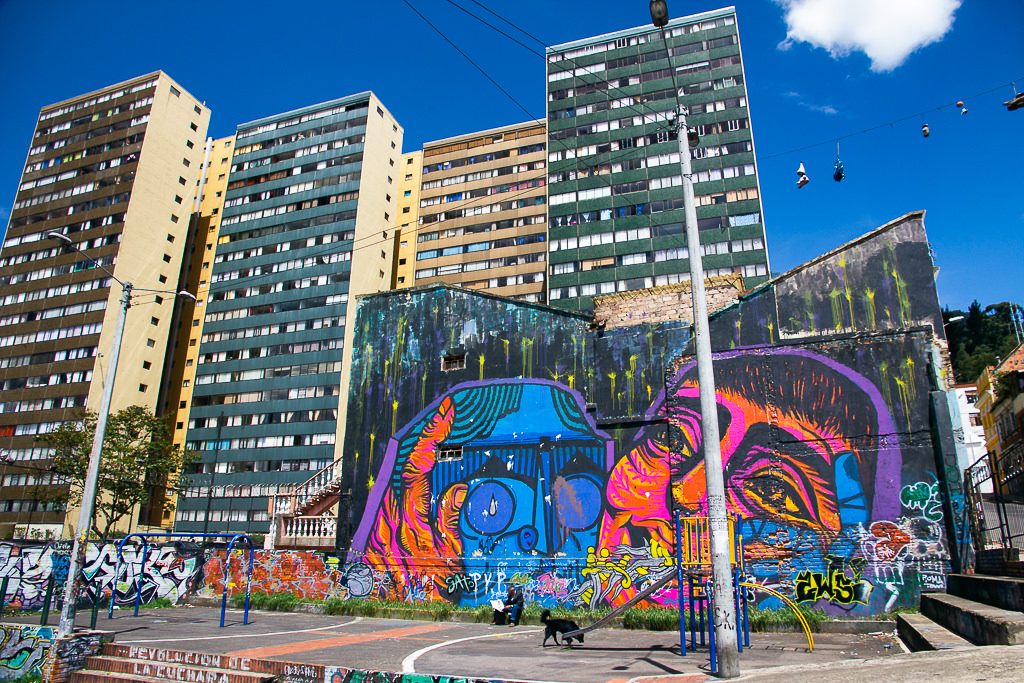
This may be counterintuitive, but actually I’ve always felt the most safe in smaller towns. In tight-knit communities with less anonimity, crime tends to be much less of an issue, doubly so if tourism is an important source of income and there’s reputation to maintain.
For instance, in northern towns like Minca or Palomino, I mostly kind of forget about security at all. The same goes for lots of towns in the coffee region, or ecotourism destinations in the national parks.
On the other hand, in certain areas of Bogota or El Centro in Medellin, I usually like to keep my camera inside my backpack until I really need to take it out. That’s admittedly purely based on ‘vibes’, but I’d like to think my traveller spider sense has served me well over the years.
Final thoughts about safety in Colombia
Having traveled for 3 months in Colombia and having had nothing but positive experiences, my main thought is that I wish more people realized how amazing this country is.
Mind you, this post is not just based on my first-hand experiences. I also try to keep my ear close to the ground in the travel community, consult official resources, and speak with as many locals as I can during my trips. So I hope you’ve found my overall perspective useful.
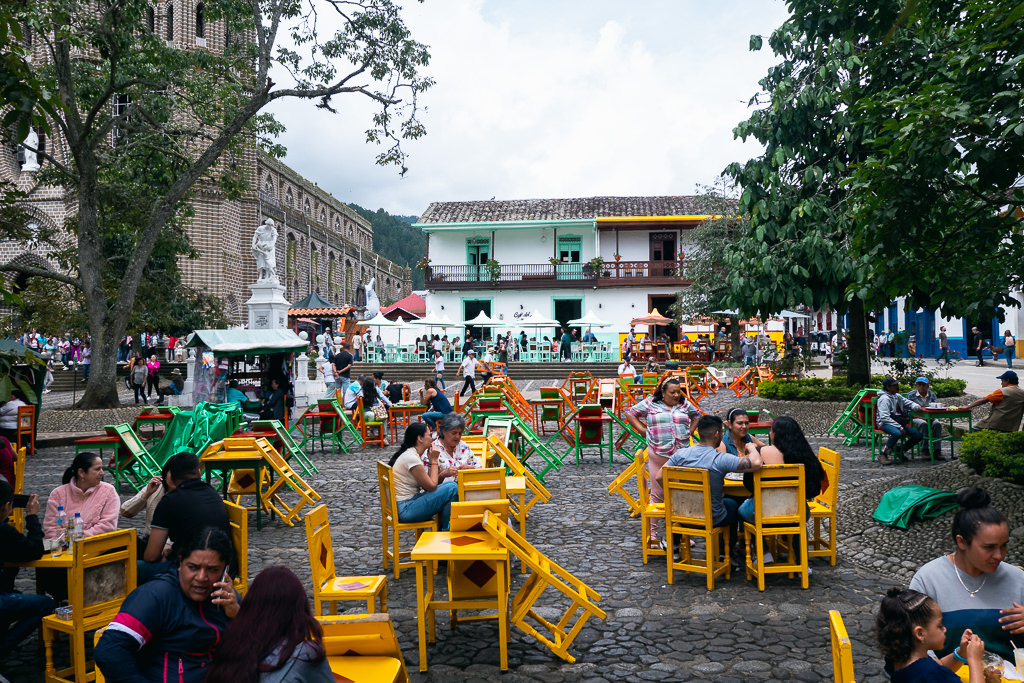
I’ve been to places where I had to get inside the fenced perimeter of my hotel as soon as it got dark, places where I could only walk for 10 minutes down a beach because ‘after that it gets too dangerous’, or where private guards armed with shotguns had to secure many of the local businesses. None of these were in Colombia. (In case you’re curious, they were in Honduras, South Africa, and Manila in the Philippines).
The situation in Colombia feels to me completely normal and nothing compared to these examples. I would personally rate the safety level in the popular areas as roughly the same as in other destinations in Latin America such as Ecuador, Peru, or Costa Rica.
But as I said before, merely discussing safety can already affect our perception, as negative statements make a bigger lingering impression than positive ones. After reading all this, perhaps what you could use is a little palette cleanser.
I love the hiking videos by Kraig Adams which are always so peaceful and tranquil… and he did one in Colombia. Watch this to get your nerves to calm!
And then… close all those other tabs you surely have open for “safety in Colombia” and know that you’ll have done the research that you needed to do. Be safe and above all enjoy your trip in Colombia!


All comments are moderated before they appear.